
Salesforce DATEVALUE Function: Syntax, Examples, and Uses
Create a Salesforce DATEVALUE Formula Field

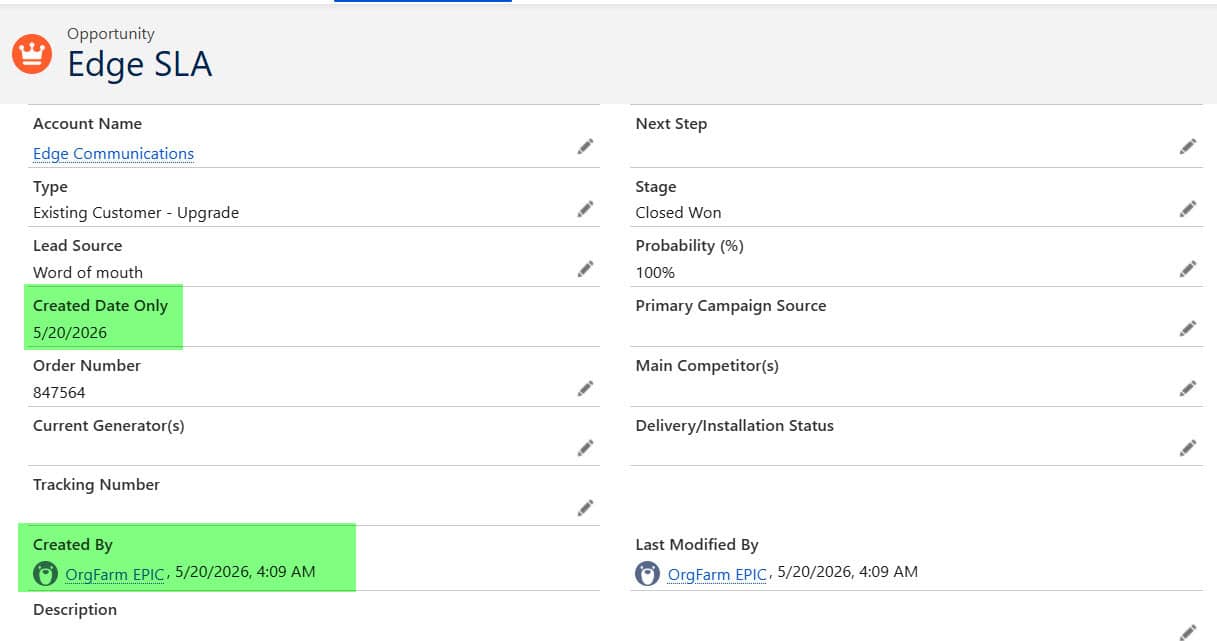
The DATEVALUE() function in Salesforce converts a Date/Time value, or text in YYYY-MM-DD format, into a Date. DATEVALUE(CreatedDate) returns just the day a record was created, in the viewing user’s time zone, so you can compare it with TODAY(), count days, or group records by day. The time-zone part is where most formulas go wrong, … Read more >>>

Salesforce REGEX Function

REGEX Function in Salesforce Classic Example

The REGEX function in Salesforce checks whether a text value matches a pattern and returns TRUE or FALSE. It is the standard way to enforce formats such as ZIP codes, phone numbers, product codes or IDs in validation rules, for example NOT(REGEX(BillingPostalCode, “\\d{5}”)) blocks any postal code that isn’t exactly five digits. Most REGEX tutorials … Read more >>>

SOQL Query on Group and GroupMember in Salesforce

Query inactive users from groups in Salesforce

To query groups in Salesforce, use two objects: Group, which holds every public group, queue and role group, and GroupMember, which holds one row for each member of a group. A SOQL query on Group and GroupMember lets you list public groups and queues, see who is in them, and find every group a user … Read more >>>

CASESAFEID() Function in Salesforce | Syntax, Examples, & Use Cases

Use CASESAFEID Function in Salesforce Classic

The CASESAFEID() function in Salesforce converts a 15-character record ID into its 18-character, case-insensitive version. You use it in formula fields when you need IDs that tools like Excel, VLOOKUP or an external database can match reliably, because those tools often treat “ABC” and “abc” as the same text. In this tutorial, I will explain … Read more >>>

We Can’t Display This Page Because Your Browser Blocks Cross-Domain Cookies in Salesforce

we can't display this page because your browser blocks cross-domain cookies, but you can view this page in salesforce classic. click here to open this page in salesforce classic.

The error “We can’t display this page because your browser blocks cross-domain cookies” appears in Salesforce Lightning Experience when your browser refuses the cookies Salesforce needs to load a page from another Salesforce domain. Some versions add “but you can view this page in Salesforce Classic” or “Try again with a different supported browser.” In … Read more >>>

Enhance Profile View in Salesforce

Salesforce enable enhanced profile view

The enhanced profile view in Salesforce (officially called the Enhanced Profile User Interface) changes how a profile’s settings are shown in Setup. Instead of one very long page with every permission listed, you get a short overview page, a search box to find any setting, and separate pages for each group of permissions. In this … Read more >>>

Salesforce BLANKVALUE Function

How to use BLANKVALUE Function in Salesforce Classic Example

The BLANKVALUE function in Salesforce checks whether a field is blank and, if it is, returns a value you choose instead. It is the standard way to show “Not provided” for an empty text field, fall back to a second field, or give a date a default in a formula field. In this tutorial, I … Read more >>>

Salesforce SUBSTITUTE() Function: Syntax, Examples, and Common Mistakes

Salesforce SUBSTITUTE() Function

The SUBSTITUTE() function in Salesforce finds a piece of text inside a string and replaces every occurrence of it with new text. It is the function admins reach for when they need to clean phone numbers, swap an email domain, standardise country names or strip unwanted characters in a formula field, without writing Apex. In … Read more >>>

TRUNC() Function in Salesforce | Syntax, Examples, & Use Cases

Use TRUNC Function in Salesforce Classic

The TRUNC() function in Salesforce cuts a number down to the number of decimal places you choose, without rounding. A typical case is a sales commission rule: pay 7.5% of the opportunity amount and drop any fraction of a cent instead of rounding it up. ROUND() would sometimes pay an extra cent; TRUNC() follows the …