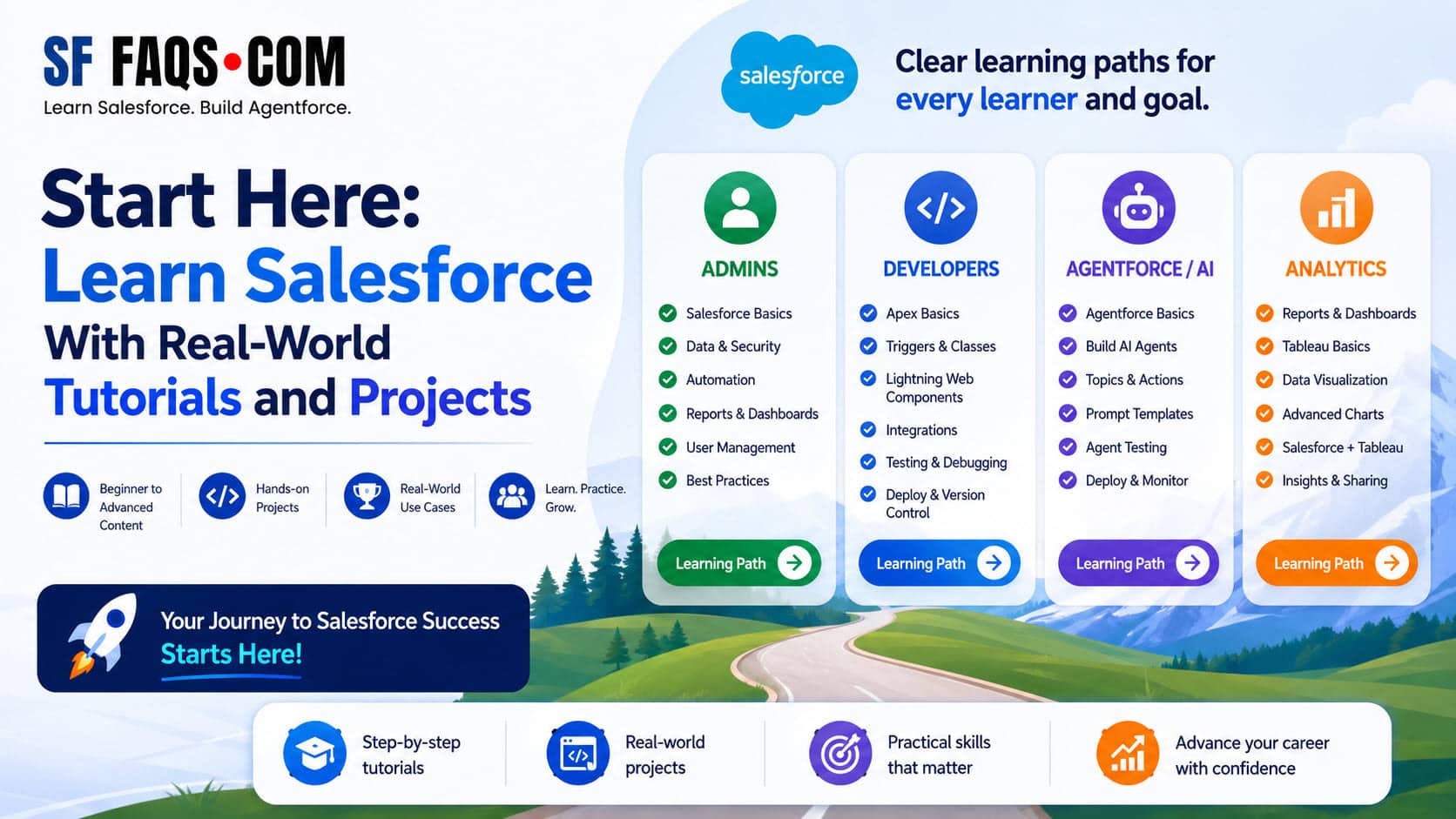
Salesforce is one of the most powerful Customer Relationship Management (CRM) platforms available today. It helps businesses manage customer relationships, streamline processes, and improve profitability. If you are new to Salesforce and want to learn it, check out this page.
What is Salesforce?
Salesforce was founded in 1999 by Marc Benioff and has since grown to become a leading cloud-based CRM platform.
It offers a range of products and services, including Sales Cloud, Service Cloud, and Marketing Cloud. Salesforce’s cloud-based architecture allows users to access the platform from anywhere, making it an ideal solution for businesses of all sizes.
Why Use Salesforce?
- Scalability: Salesforce can grow with your business, from small businesses to large enterprises.
- Customization: The platform is highly customizable, allowing you to tailor it to your specific business needs.
- Integration: Salesforce integrates with numerous third-party applications, enhancing its functionality and flexibility.
- Community and Support: With a vast user community and extensive support resources, learning and troubleshooting are more manageable.
Getting Started with Salesforce
Create a Salesforce Account
Before diving into Salesforce, you need to create an account. Salesforce offers a free trial, an excellent way to explore the platform without any financial commitment.
- Visit the Salesforce website: Go to Salesforce and click on the “Try for Free” button.
- Fill in your details: Complete the registration form with your personal and business information.
- Verify your email: Salesforce will send a verification email. Follow the instructions in the email to verify your account.
Navigating the Salesforce Interface
Once you have created your account and logged in, you’ll be greeted by the Salesforce interface. Understanding the layout is crucial for efficient navigation.
- Home Page: The home page provides an overview of your tasks, events, and recent records. It’s your dashboard for daily activities.
- App Launcher: Located at the top-left corner, the App Launcher allows you to switch between different Salesforce apps like Sales, Service, and Marketing.
- Navigation Bar: This bar at the top of the screen provides quick access to standard objects like Accounts, Contacts, Opportunities, and Leads.
- Settings: Click on the gear icon in the top-right corner to access settings to customize your Salesforce experience.
Key Salesforce Concepts
Before diving deeper, it’s essential to understand some key concepts in Salesforce:
- Objects: Tables in the Salesforce database that store data. There are two types of objects: Standard Objects (like Accounts, Contacts, and Opportunities) and Custom Objects (created to meet specific business needs).
- Records: Individual entries in an object. For example, a single customer would be a record in the Contacts object.
- Fields: Fields are columns in an object that store data about a record. For example, the Contact object might include fields such as Name, Email, and Phone Number.
- Relationships: How objects relate to each other. There are several types of relationships, including Lookup Relationships and Master-Detail Relationships.

Salesforce Data Types
Salesforce supports a variety of data types to store and manage information efficiently within the platform. Common data types include text, numbers, dates, and currencies, which allow for straightforward data entry and manipulation.
>> Read Salesforce Data Type Tutorials <<
Salesforce Functions and Formulas
Salesforce functions and formulas allow users to perform calculations and manipulate data within fields. Standard functions include mathematical operations, text manipulation, and logical statements, which can be used to create dynamic formula fields that update automatically as other data changes.
>> Read All Salesforce Functions and Formulas Tutorials <<
Salesforce Reports and Dashboards
Salesforce reports and dashboards are essential for visualizing and analyzing your business data. Reports allow users to generate detailed, customizable views of their data, filtering and grouping information to uncover insights and track key performance indicators (KPIs).
>> Read All Salesforce Reports and Dashboards tutorials <<
Salesforce Data Loader
Salesforce Data Loader is designed for bulk data import and export, making it easier to manage large volumes of data within the Salesforce platform. It supports various operations, including insert, update, delete, and export, enabling users to handle data migration and synchronization tasks efficiently.
>> Read all Salesforce Data Loader Tutorials <<
Salesforce Flows
Salesforce Flows is an automation tool within the Salesforce platform that allows users to create complex business processes with a visual, drag-and-drop interface. Flows can automate repetitive tasks, guide users through multi-step processes, and integrate with external systems.
>> Read more Salesforce Flows Tutorials <<
Salesforce Apex
Salesforce Apex is a strongly typed, object-oriented programming language designed for developers to execute complex business logic on the Salesforce platform. Apex enables developers to create custom backend functionality, such as triggers, controllers, and batch processes, extending and customizing Salesforce applications beyond standard capabilities.
>> Read all Salesforce Apex Tutorials <<
Customize Salesforce
One of the strengths of Salesforce is its ability to be customized to fit your business needs. Here are some basic customization tips:
Create Custom Objects
Custom objects allow you to store data unique to your business.
- Go to Setup: Click on the gear icon and select “Setup.”
- Navigate to Objects and Fields: In the Quick Find box, type “Objects” and select “Object Manager.”
- Create a New Object: Click on “Create” and choose “Custom Object.” Fill in the details for your new object and save.
Create Custom Fields
Custom fields allow you to capture additional information on your objects.
- Select an Object: In the Object Manager, select the object you want to add a field to.
- Add a New Field: Click on “Fields & Relationships” and then “New.” Choose the field type (e.g., Text, Number, Date) and fill in the details.
- Save the Field: Click “Next,” set the field-level security, and save your new field.
Create Page Layouts
Page layouts control the layout and organization of fields, buttons, and related lists on an object record page.
- Select an Object: In the Object Manager, select the object you want to customize.
- Edit Page Layouts: Click on “Page Layouts” and select the layout you want to edit.
- Drag and Drop: Use the drag-and-drop interface to add, remove, or rearrange fields and related lists.
- Save the Layout: Save your changes once you’re satisfied with the layout.
Automate Processes with Salesforce
Salesforce offers powerful automation tools to streamline your business processes:
Workflow Rules
Workflow rules allow you to automate standard internal procedures and processes.
- Go to Setup: Click the gear icon, then select “Setup.”
- Navigate to Workflow Rules: In the Quick Find box, type “Workflow Rules” and select it.
- Create a New Rule: Click “New Rule,” select the object, and set the criteria for your rule.
- Add Actions: Define the actions that should be taken when the rule criteria are met (e.g., email alerts, field updates).
- Activate the Rule: Save and activate your workflow rule.
Process Builder
Process Builder is a more advanced tool that allows you to automate complex business processes.
- Go to Setup: Click on the gear icon and select “Setup.”
- Navigate to Process Builder: In the Quick Find box, type “Process Builder” and select it.
- Create a New Process: Click “New” and define the process name and object.
- Define Criteria: Set the criteria that trigger the process.
- Add Actions: Define the actions to be taken (e.g., create records, update records, send emails).
- Activate the Process: Save and activate your process.
Flow Builder
Flow Builder allows you to automate complex business processes using a visual interface.
- Go to Setup: Click on the gear icon and select “Setup.”
- Navigate to Flow Builder: In the Quick Find box, type “Flows” and select “Flow Builder.”
- Create a New Flow: Click “New Flow” and choose the flow type (e.g., Screen Flow, Record-Triggered Flow).
- Design Your Flow: Use the drag-and-drop interface to design your flow, adding elements like screens, decisions, and actions.
- Activate the Flow: Save and activate your flow.
Report and Dashboards in Salesforce
Salesforce provides robust reporting and dashboard tools to help you analyze your data and make informed decisions.
Create Reports
- Go to Reports: Click on the “Reports” tab in the navigation bar.
- Create a New Report: Click “New Report” and select the report type.
- Customize the Report: Use the drag-and-drop interface to add fields, filters, and groupings.
- Run the Report: Click “Run” to generate the report and view the results.
- Save the Report: Save your report for future use.
Create Dashboards
- Go to Dashboards: Click on the “Dashboards” tab in the navigation bar.
- Create a New Dashboard: Click “New Dashboard” and enter the dashboard name and folder.
- Add Components: Click “Add Component” and select the report you want to use. Customize the component type (e.g., chart, table) and settings.
- Save the Dashboard: Save your dashboard and view it to see your data visualized.
Salesforce Tutorials for Beginners
Here is the list of Salesforce tutorials for beginners.
- How to Find Salesforce Org ID?
- How to Deactivate the Salesforce Developer Edition Org
- How to Set up Business Hours, Time Zone, and Language in Salesforce
- Salesforce Time Zone | How to Change Time Zone in Salesforce
- How to Setup Currencies in Salesforce
- Create Home Page in Salesforce
- How to Create a Custom App in Salesforce?
- Salesforce Lightning App Page
- How to Create Custom Objects in Salesforce?
- How to Create Custom Tabs in Salesforce
- How to Create Products in Salesforce
- How to Control Login Access Policies in Salesforce
- Setup Einstein Bots in Salesforce
- Where is Recycle Bin in Salesforce
- How to Import Leads in Salesforce
- How to Export Leads in Salesforce
- How to Mass Delete Leads in Salesforce
- How to Merge Duplicate Leads in Salesforce
- Salesforce Document | My Personal Document
- Task in Salesforce
- How to Create a Case in Salesforce
- How to Close a Case in Salesforce
- Salesforce Chatter
- Create Task List View Salesforce Lightning
- How to Install Salesforce Data Loader for Windows
- How to Create an Opportunity in Salesforce
- How to Create a User in Salesforce
- How to Check User Licenses in Salesforce
- How to Freeze and Unfreeze User in Salesforce
- Lock and Unlock User Accounts in Salesforce
- Profile in Salesforce | Create Profile in Salesforce
- How to Deactivate Salesforce User
- How to Create Community User in Salesforce
- Salesforce Profile Picture
- Enhance Profile View Salesforce
- How to Reset a User Password in Salesforce
- Create a Free Customer Chatter User in Salesforce
- Chatter Post button does not visible in Salesforce Lightning
- Assignee does not have permission to view cases in Salesforce
- We can’t display this page because your browser blocks cross-domain cookies in Salesforce Classic
- Chatter Publisher not Showing in Salesforce
- Salesforce Lightning Log a Call button missing
- New Task Button Not Showing in Salesforce Lightning
- Tabs Not Visible in Salesforce
- Convert button on lead not visible in Salesforce Lightning
- Quick Actions Missing from Case in Salesforce Lightning
- Edit Button not visible on Salesforce Lightning Page
- New Button Missing on Campaigns in Salesforce
- New Button Missing on Account Object in Salesforce
- Merge case button not showing in Salesforce
- Integration License Not Displaying While Creating Integration User in Salesforce
- How to Create Integration User in Salesforce
- How to Create a Public Link to Share Files in Salesforce
- What Language Does Salesforce Use: Apex and Lightning Explained
- Apex Classes in Salesforce
- How to Get a Job at Salesforce
- What Is Salesforce Vlocity
- Explain Salesforce Opportunity Object
- What Does a Salesforce Architect Do
- Introduction to Journey Builder in Salesforce Marketing Cloud
- What Is Salesforce Integration
- What Is Salesforce AgentForce
- What Is the Use of Workbench in Salesforce
- How to Enable Knowledge in Salesforce
- What Is Salesforce Edge Network
- Free Salesforce CRM Suite for Small Businesses
- What is Salesforce Service Cloud?
- What is Sales Cloud in Salesforce?
Salesforce Advanced Tutorials
- Salesforce CRM Analytics vs Tableau
- Salesforce Inbox vs Einstein Activity Capture
- Salesforce Notes and Attachments vs Files
- Difference Between Salesforce and Salesforce Lightning
- What Language Does Salesforce Use
- What is LWC in Salesforce: A Concise Guide to Lightning Web Components
- How Is Salesforce Used in Healthcare: Improving Patient Care and Operations
- What Is Salesforce DevOps
- What is Salesforce Business Analyst
- What Is an Identity User in Salesforce
- What Is an Advantage of the Salesforce Platform?
- What Is an App in Salesforce
- What Is Salesforce Optimizer
- What is Field Service Lightning (FSL) in Salesforce
- How to Create Knowledge Article in Salesforce
- How to Use the Salesforce Inspector
- How to Use Salesforce for Marketing
- What is Hyperforce in Salesforce
- What Is Salesforce Financial Services Cloud?
- What is SFDX in Salesforce
- What Is Salesforce Connect?
- Difference between 15 and 18 Digit Salesforce ID
- Salesforce Profiles and Permission Sets
- What Is a Platform Event in Salesforce
- What is Salesforce Inbox?
- How to Become Salesforce Developer with No Coding Experience
- Why Choose Salesforce
- How to Setup External Objects in Salesforce?
- Error: ‘You don’t have the level of access necessary to perform the operation you required’
- Create and Export Unmanaged Package For Flows as Zip File in Salesforce
- Create Downloadable Salesforce Packages with VS Code & CLI
- Free Salesforce CRM Suite for Small Businesses
Conclusion
Salesforce is a powerful platform that can transform how you manage customer relationships and business processes. I hope you can now start using Salesforce from these Salesforce tutorials for beginners.
- Salesforce Admin Interview Questions and Answers
- Salesforce Business Analyst Interview Questions and Answers
- Salesforce Marketing Cloud
- Salesforce Marketing Cloud Interview Questions and Answers
- Salesforce Experience Cloud
- Service Cloud in Salesforce
- How To Schedule Jobs Using the Apex Scheduler in Salesforce
- Salesforce Developer Interview Questions and Answers for 5 Years Experience
- How to Become a Salesforce Consultant: 5 Essential Steps for Success
- How Long Does It Take to Become a Salesforce Developer
- How to Use Salesforce for Customer Success
- How does Salesforce Use AI for Business Growth
- Top 10 Salesforce CRM Rivals in 2024
- Why Choose Salesforce for Your Business
- How to Use Salesforce for Project Management
- What is SFDC in Salesforce
- What Is Sandbox in Salesforce
- View and Read-only Permission Access in Salesforce
- 5 Essential Steps to Become a Salesforce Consultant
- Salesforce Marketing Cloud vs Pardot
- What is Salesforce Sales Engagement
- Salesforce Sales Cloud vs Service Cloud
- Salesforce RLM vs CPQ Comparison
- What Is Salesforce Lightning Experience
- Lead vs Contact in Salesforce
- How to Start a Salesforce Consulting Business
- Difference between Apttus CPQ and Salesforce CPQ
- What Is Salesforce Digital Engagement
- Salesforce Managed and Unmanaged Packages
- Master-Detail vs Lookup Relationships in Salesforce
- What is Metadata in Salesforce
- Adobe CDP vs Salesforce CDP
- Text and Text Area Fields in Salesforce
- Salesforce Process Builder vs Flow
- Polymorphic Relationships in Salesforce SOQL
- Zoho vs Salesforce for Small Business
- Domo vs Salesforce Wave Analytics
- Microsoft Dynamics 365 vs Salesforce Comparison
- Salesforce Community Cloud vs Experience Cloud
- What Is Salesforce CRM Analytics (CRMA)
- Difference Between Salesforce Custom Settings and Custom Metadata
- Salesforce Data Cloud vs Snowflake
- What is Salesforce Customer 360
- What Is Salesforce CDP (Customer Data Platform)
- Introduction to Salesforce OmniStudio
- Salesforce Marketing Cloud vs HubSpot
- Roles and Profiles in Salesforce: Key Differences
- NetSuite CRM vs Salesforce CRM: Comparison Guide
- Salesforce Service Cloud vs Zendesk
- Adobe Commerce vs Salesforce Commerce Cloud Comparison
- 45 Salesforce Product Manager Interview Questions and Answers
- Marketo vs Salesforce Marketing Cloud
- Oracle CPQ vs Salesforce CPQ
- 35 Salesforce Service Cloud Interview Questions and Answers
- 50 Salesforce Software Engineer Interview Questions and Answers
- Adobe Experience Platform vs Salesforce
- Comparison Between Oracle Sales vs Salesforce Sales Cloud
- What Does a Salesforce Consultant Do?
- Salesforce for Outlook vs Outlook Integration
- Salesforce Certified Administrator Salary Guide
- How Hard Is It to Learn Salesforce?
- How Much Do Salesforce Developers Make?
- How to Create and Deploy Unmanaged Package in Salesforce
- 50 Frequently Asked Salesforce Flow Interview Questions and Answers
- Restrict Record Access For Users in Salesforce
- “Log a Call” in Salesforce to Track Customer Conversations
- Opportunity Object in Salesforce
- What Is Salesforce Digital Engagement [Guide to Customer Interaction]